First, define the goal honestly
Emphasis is possible. Perfect isolation is not.
Your glutes, hamstrings, quadriceps, adductors, trunk, and smaller hip muscles cooperate during lower-body exercise. Changing the program can shift how much work each muscle does, but no stance or cue turns every non-glute muscle off.
A more realistic goal is to put more of your weekly work into hip extension and abduction while reducing knee-dominant sets. That usually means fewer squats, leg presses, lunges, and step-ups, but not necessarily none at all.
How to build the plan
Build the week around four types of movement.
Bridge
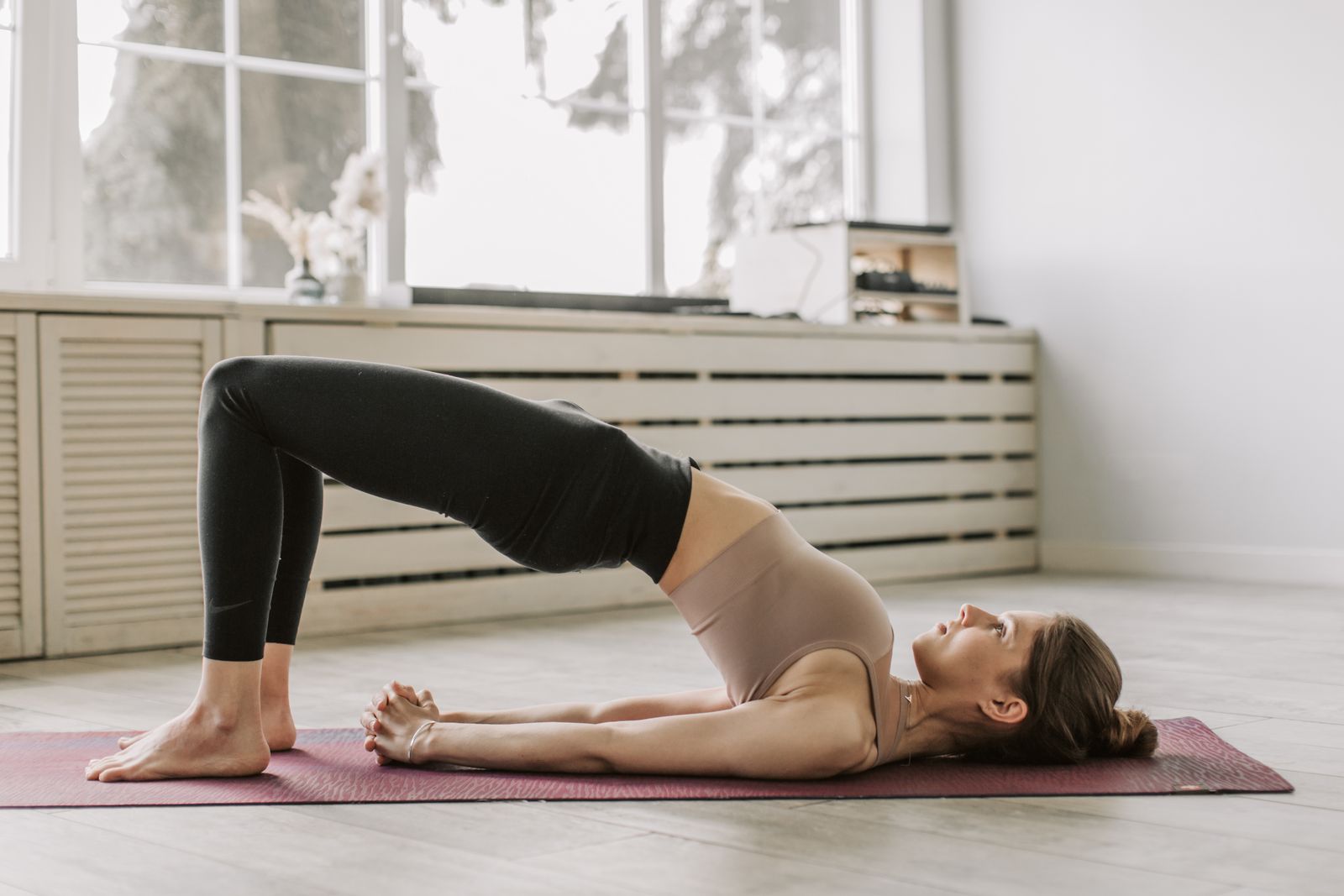
A hip thrust or glute bridge gives you a stable hip-extension exercise that you can gradually make more challenging.
Hinge
A Romanian deadlift or back extension trains hip extension in a different position with low quad demand.
Kickback
A cable or band kickback adds hip-extension work without another knee-dominant movement.
Abduction
A machine or band variation complements the main lifts; it does not replace them.
Compare the exercises
Know the tradeoff before adding the set.
| Exercise | Pattern | Quad demand | Other considerations |
|---|---|---|---|
| Hip thrust | Bridge | Low–moderate | A loadable hip-extension exercise performed with the upper back supported. It is useful when you want a major glute exercise without making a squat pattern the center of the session. |
| Glute bridge | Bridge | Low | A floor-based bridge with a shorter range than the hip thrust. It is approachable at home and useful for learning hip extension or adding glute work with little equipment. |
| Romanian deadlift | Hinge | Low | A loaded hip hinge that trains the glutes and hamstrings while the knees remain softly bent. It complements bridges by challenging hip extension in a more lengthened position. |
| Cable kickback | Accessory | Low | A supported single-leg hip-extension accessory. It adds glute work without another squat pattern and works well after a heavier bridge or hinge. |
| 45-degree back extension | Hinge | Low | A supported hinge that can train the glutes, hamstrings, and spinal erectors. It is useful when balance or grip makes free-weight hinges difficult. |
| Seated hip abduction | Accessory | Low | An accessory that trains hip abduction with minimal knee-extension demand. It can complement—not replace—loadable hip-extension exercises. |
| Step-up | Single-leg | Moderate | A single-leg exercise that trains both the glutes and thighs. Step height, forward lean, control, and load affect how demanding it feels, but it is never a quad-free movement. |
| Bulgarian split squat | Single-leg | Moderate–high | A demanding single-leg squat pattern that trains the glutes and thighs. A longer stance and controlled torso lean may change joint demands, but the quadriceps still work hard. |
- Hip thrust technique
- Glute bridge technique
- Romanian deadlift technique
- Cable kickback technique
- 45-degree back extension technique
- Seated hip abduction technique
- Step-up technique
- Bulgarian split squat technique
These labels describe how much the exercises generally demand of your quadriceps; they do not measure muscle growth. Romanian deadlifts and back extensions still train hamstrings. If limiting the back of the thigh also matters, reduce hinge volume and use bridges, kickbacks, or abduction according to comfort and response.
Starter program
A two-day plan you can actually measure.
Train on two non-consecutive days. The example totals 12 working sets per week; begin with fewer if new or returning. Rest 2–3 minutes for main lifts and 1–2 minutes for accessories. Stop each set when you could still do about 2–3 more repetitions with good form. Count other leg sessions before adding this plan.
Bridge plus hinge
- Hip thrust2 × 8–12
- Romanian deadlift2 × 6–10
- Cable kickback1 × 10–15 / side
- Seated abduction1 × 12–20
Bridge plus accessories
- Weighted glute bridge2 × 10–15
- 45° back extension2 × 8–12
- Kickback variation1 × 12–15 / side
- Abduction variation1 × 12–20
Troubleshoot by symptom
Do not rebuild the program after one strange session.
Front thighs dominate
Review how many squat, lunge, step-up, and leg-press sets you do. During thrusts, check whether the feet are too close and the knees keep traveling forward.
Open the quad auditHamstrings cramp
During bridges, bring the feet slightly closer and shorten the range. During hinges, remember that hamstring work is expected.
Troubleshoot bridgesGlutes are not progressing
Check whether the main exercises are becoming more demanding and whether you are eating, sleeping, and training consistently enough to support progress.
Run the progress auditBalance changes technique
Use support or choose stable exercises. Stability is a tool, not a test of whether an exercise counts.
Find supported optionsMeasure and adjust
Let your own trend decide whether the plan fits.
Track training
Record exercise, load, repetitions, range, and meaningful technique changes.
Measure consistently
Take measurements every few weeks, placing the tape at the same points on your body and keeping the time of day, posture, and conditions consistent.
Change one thing at a time
If your thighs are growing more than you want, reduce sets of exercises that train both your glutes and thighs. If you are not making progress, make the exercises more challenging or review your recovery.
Beyond the workout
Muscle growth depends on more than training.
Exercise gives the muscles a reason to adapt. Food and protein support that process, sleep helps you train well again, and genetics and anatomy affect how the result looks. The encyclopedia explains each of those pieces in more detail.
If you want the full training, nutrition, recovery, and progression framework in one place, use the complete glute-growth guide.
Nutrition
Understand calories, protein, carbohydrates, dietary fat, hydration, plant-based planning, and creatine without “booty food” myths.
Start with proteinGenetics & structure
Learn why muscle, fat distribution, bone structure, and individual response create different shapes from similar routines.
Understand the full pictureRecovery
Use sleep, fatigue, and performance to decide whether more training will help or merely add fatigue.
Read the sleep guideRealistic results
Distinguish getting better at the exercises early on from visible muscle growth, and measure changes under consistent conditions.
Set a realistic timelineResearch notes
Sources behind this guide
- Plotkin et al. (2023): hip thrust versus back squat training
A nine-week study that reported similar measured gluteal hypertrophy between groups and greater thigh hypertrophy in the squat group.
- Currier et al. (2023): resistance-training prescription meta-analysis
A large network meta-analysis comparing combinations of load, sets, and frequency for strength and hypertrophy.
- Neto et al. (2020): gluteus maximus activation review
A systematic review of gluteus maximus activation across loaded hip-extension exercises.
- American College of Sports Medicine (2026): resistance-training position stand
The current ACSM position stand summarizing resistance-training prescription for healthy adults.